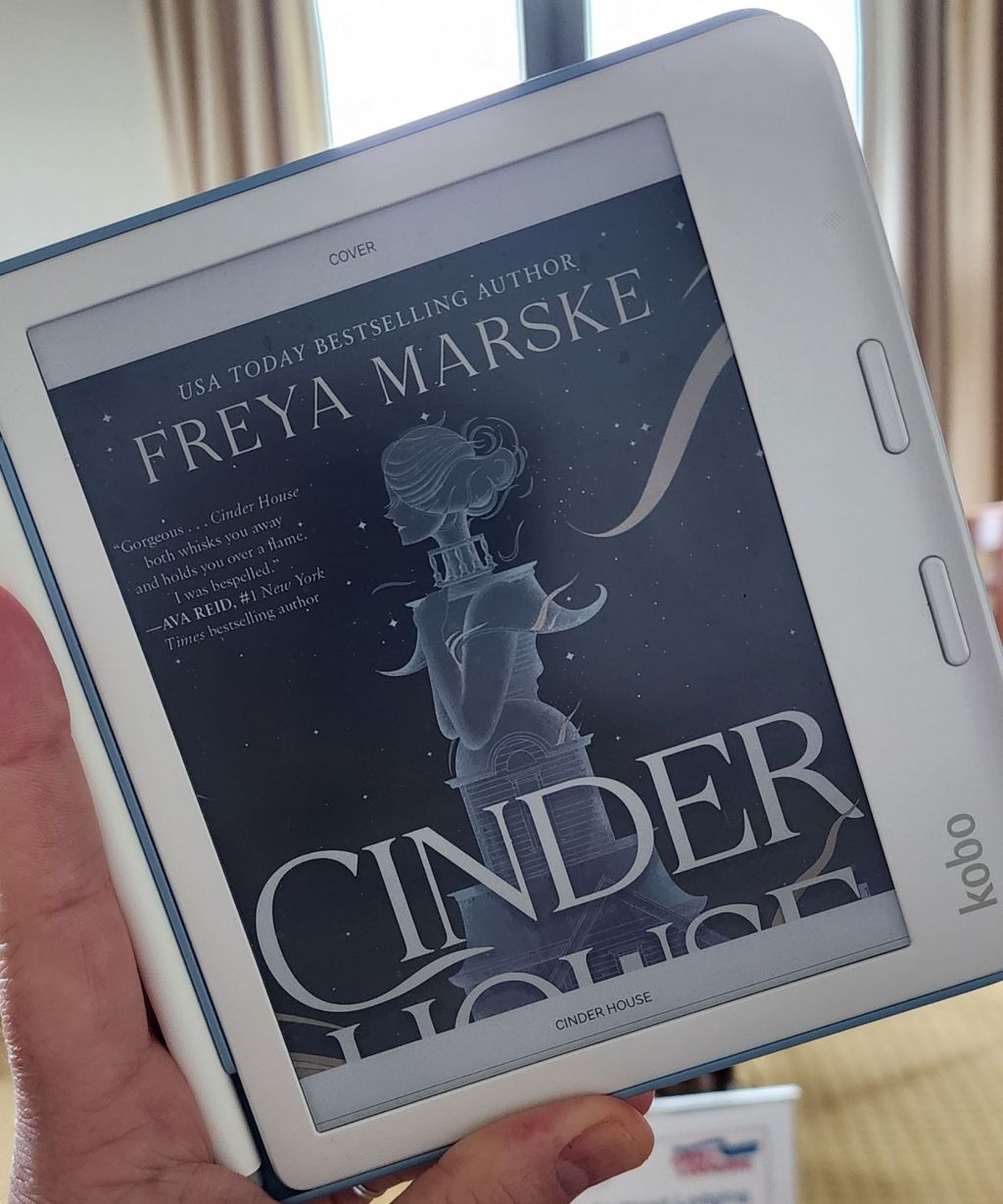
I read this (epub) in two or three sittings on 12 May 2026.
This novella is up for a 2026 Hugo Award. If you become a voting member, you can download the voters packet and read it yourself.
Fairy tale retellings, especially the ones Disney has already done, are always a bit of a miss for me. I’m not sure why. I think it has to do with a sense of wanting mastery. I feel like I must be missing out on something if I’m not thoroughly familiar with the source material (this also feeds my unwillingness to write such stories).
I’ve also been embarrassed and/or annoyed when someone has brought up their own superiority in knowing “the original Dutch story actually has a tragic ending.” Okay, that specific line is fine – it is good for us to remember that the Disnified versions are too pat and cheery, and the tales they’re stealing from are usually dark. So that’s fine. But I do get annoyed by the (usually unverifiable) claims to knowing the “real” ending.
All this to say that I’m not sure how cleanly this tale follows Cinderella. Not very closely, I think. Mostly there are just references, like a hollowed-out pumpkin, but the pumpkin isn’t a carriage or a plot point. That sort of detail is quite enjoyable, and I know I would have caught more of them if I was more familiar with Cinderella, but I don’t feel like my level of familiarity hampered my enjoyment in any way.
The story starts with a lovely departure from the classic tale. Our narrator, Ella, dies on the first page, and haunts the house that her evil stepmother has inherited. The classic abuse is still present but now reframed as an interesting take on a ghost/haunting story.
More significantly to my tastes for this tale, the story actually gives Ella and the prince a way to know and like each other, before the enchanted dance. The true dark nature of fairy birth-blessing-curses was also emphasized in the prince’s story, which added dimension and depth that I don’t remember from the 1950 cartoon.
I quickly guessed who the skinny ballet-watcher was, but it was still a nice reveal. It felt right, like a story element that just had to be there, of course. I did not anticipate the reveal of the scholar’s identity, but it certainly fit in a Chekhovian way.
I think my favorite thing about this story is the subtle queerness and eroticism, and then the very horny ending with magical bondage. Yes please more of this.
The story is queer in a few ways. It is about ghost-living relations, and inversions of gender norms, and some clear sapphic attraction. It’s also about the queerness inherent in disability.
This might be a new concept for you, reader. I’m not the best source for this, and I don’t claim to be an expert, but I’ll try to explain. That said – I ain’t your damned search engine.
Essentially, queerness is about loving as an OTHER, loving in OTHER ways, being not part of the norm. The kind of baseline default about relationships in media (and the zeitgeist) is a monogamous heterosexual couple (of the same race) of childbearing age, who are equally physically abled. That’s what society calls normal.
When you tweak those settings, you get stranger combinations that are increasingly less accepted as normal. Eventually it becomes flat-out weird: OTHER. And when we insist on telling these love (and sex) stories, when we don’t just acknowledge but celebrate the differences, then we are being queer.
Ella, who haunts her house, cannot leave. Many disabled folks struggle with leaving their homes, for any number of reasons (mental energy, physical energy, pain, accessibility issues, sensory concerns… the list goes on). Ella’s intangible ghostliness is also a metaphor for being unable to experience the world in the default abled way.
This is made queer by showing us her yearning and attraction, not just for the prince, but for other people (including women), and even a form of sensuality inherent to being a house. When she does have opportunities to act on her body’s needs, that is in the context of being forbidden and impossible, and in defiance of a curse. Her otherness allows her to do something that ‘normal’ people cannot do. When sexualized, that is definitely queer, even if it is a male/female pairing.
Plus, uh, the horny happy ending with the magical bondage ropes. That’s hella queer, obviously, but that’s more overt and explicit and only slightly about the ‘queerness of disability’ that I mentioned above.
Yesterday I wrote that Automatic Noodle was my favorite for the award but also admitted that it was probably too soon to say that. I have to now admit that I was wrong and right, respectively. Cinder House is now my favorite (I’ve also finished The Summer War, which I loved, but not as much as this).


Leave a comment